
Theory, Design, Experimentation, Commercialisation
Satisloh Plasma Polisher
Plasma Surface Figuring Precision Optics
Long term project helping develop the SPP from protype to the market, supporting on plasma physics, chemistry, engineering, characterisation, optimisation, and commercialisation including presenting the SPP at leading industrial and commercial events such as Optatec.

Design, Procurement, Experimentation, Commercialisation
Project Shar
Scalable High-Power ICP Torch for Assessing Atmospheric Re-entry Emissions and Environmental Impact
In collaboration with Southampton University and the UK Space Agency, developing a hypersonic plasma jet to simulate atmospheric reentry of satellites to understand the environmental and human health impacts.

Theory, Characterisation, Regulation
Adtec SteriPlas
Assisting in the development of the SteriPlas, a system using cold plasma to treat stubborn wounds and infections. Conducted characterisation (Spectroscopy and measurement of gasses) to achieve safety certification and enable the SteriPlas to enter the market as a CE approved medical device.

Theory, Characterisation, Experimentation, Application
Adtec Plasmatact
Provided experimentation and characterisation services towards the applications development of the PlasmaTact, a surface engineering tool using low power Microwave Plasma and argon gas to produce a nonthermal (cold) plasma for surface energy modification.
Modelica, 3D Fully Coupled COMSOL, Digital Twin, Experiments
PlasmaTrack
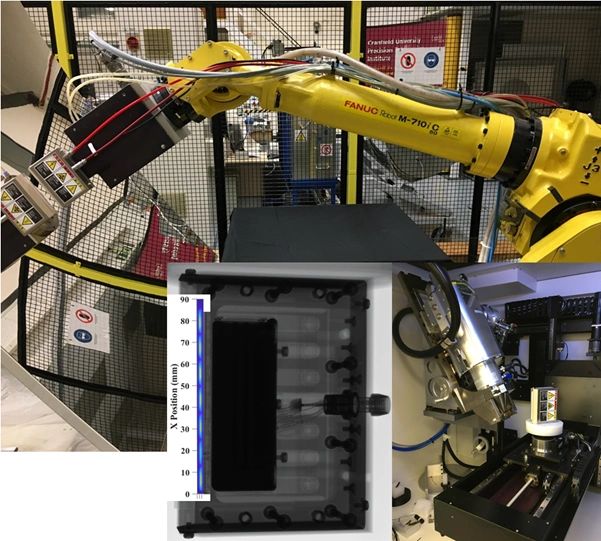
Development of a plasma torch to tackle "leaves on the line", graphite-like carbon deposits created by huge amounts of pressure exerted by train wheels as they run over leaves on rails, creating a slippery surface that forces trains to travel slower.
Theory, Characterisation, Application Development
Solar Plasma Project
Innovative plasma technology under development, which is capable of cleaning Concentrating Solar Power (CSP) mirrors, in deserts, without the use of water.
Disruptive technology projected to save billions of litres of water per year, globally and increase the CSP plant energy efficiency.
Funded: Adtec Plasma Technology
Theory, Characterisation, Application Development
Project Phoenix
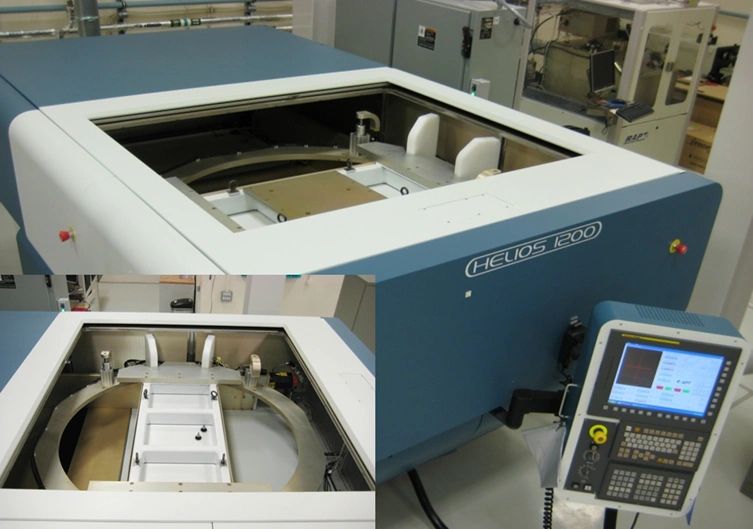
The Helios 1200 in Cranfield University was originally designed to manufacture meter-scale ultra-precision optics for the European Extremely Large Telescope (E-ELT).
This project repurposed the Helios for etching of aerospace metals such as Ti64.
Funded: MTC

Theory, Characterisation, Application Development
Project RaP
Reactive Atom Plasma
Etching and deposition applications with near atomic precision.

Inline in-situ metrology
Spectroscopy
Inline monitoring of atmospheric plasma jets is crucial for maintaining consistent plasma performance.
Ultra Precision Optical Emission Spectroscopy allows for the monitoring of spatial and temporal plasma stability and the atomic species in the plasma.
Validation of theory and digital t